Posts

Herbicide Carcinogen Effect on Human

Image
U.S. regulators have relied on flawed and outdated research to allow expanded use of an herbicide linked to cancer, and new assessments should be urgently conducted, according to a column published in the New England Journal of Medicine on Wednesday. There are two key factors that necessitate regulatory action to protect human health, according to the column: a sharp increase in herbicide applied to widely planted genetically modified (GMO) crops used in food, and a recent World Health Organization (WHO) determination that the most commonly used herbicide, known as glyphosate , is probably a human carcinogen. The opinion piece was written by Dr. Philip Landrigan , a Harvard-educated pediatrician and epidemiologist who is Dean for Global Health at the Mount Sinai Medical Center in New York, and Chuck Benbrook, an adjunct professor at Washington State University 's crops and soil science department. "There is growing evidence that glyphosate is geno-toxic and...

SMART DRUG THAT WORKS

Image
The "smart drug" modafinil actually does work for some people, improving their performance on long and complex tasks, also enhancing decision-making and planning skills, a new review of studies finds. Modafinil, also known by its brand name Provigil , is approved by the Food and Drug Administration to treat people with sleep disorders such as narcolepsy . But the majority of the drug's users — such as students who take it to study for exams — use it off-label, believing it may help them focus. This is despite the lack of strong evidence to date showing that the drug actually works this way. "This is the first overview of modafinil's actions in non-sleep-deprived individuals since 2008, and so we were able to include a lot of recent data," Ruairidh McLennan Battleday , a co-author of the new review and a lecturer at the University of Oxford in England, said in a statement. The recent studies of the drug have used more-complex tests of cogni...

NUTS PROTECTS AGAINST EARLY DEATH

Image
Eating half a handful of nuts walnuts, peanuts, cashew nuts, almond nuts etc every day could substantially lower the risk of early death, a Dutch study suggests. Previous studies had already indicated a link with cardiovascular health, but this is the first to look at specific nuts and diseases. Maastricht University researchers found a 23% lower chance of death during the 10-year study in people eating at least 10g (0.3oz) of nuts or peanuts a day. There was no benefit for peanut butter, which is high in salt and trans fats. What's in a nut? monounsaturated and polyunsaturated fatty acids various vitamins fibre antioxidants other bioactive compounds More than 120,000 Dutch 55-to-69-year-old men and women provided dietary and lifestyle information in 1986, and then their mortality rate was looked at 10 years later. The premature mortality risk due to cancer, diabetes, respiratory and neurodegenerative diseases was lower among the nut consumers. There w...

REASONS TO WATCH FOR TICK BITE

Image
Lyme disease makes the headlines but there are plenty of additional reasons to avoid tick bites . New research highlights the latest in a growing list of tick-borne threats - a distant relative of Lyme that's easy to confuse with other illnesses. Borrelia miyamotoi - should be on the radar when people in Lyme-endemic areas get otherwise unexplained summertime fevers . It's one of several recently discovered diseases linked to ticks in different parts of the country, a reminder to get tick-savvy no matter where you live. "People need to be aware of what tick-borne diseases are in their area," says Dr. Peter J. Krause of Yale University , a specialist who reviewed the research. "And they should know how to avoid ticks." WHAT'S THIS NEW INFECTION? The first U.S. case was reported in 2013 in New Jersey, an 80-year-old cancer survivor who over four months became increasingly confused, had difficulty walking and lost 30 pounds. Doctors found...

NEW MALARIA DRUG - TREAT, PROTECTS AND PREVENTS ITS SPREAD

Image
Mosquito bite Researchers at Dundee University have discovered a new compound which could treat malaria while protecting people from the disease and preventing its spread, all in a single dose. The compound, DDD107498, was developed by the university's Drug Discovery Unit and the Medicines for Malaria Venture. Scientists said the "exciting" new drug could work well against parasites resistant to current treatments. Details of the discovery have been published in the journal Nature. The World Health Organisation reported 200 million clinical cases of malaria in 2013, with 584,000 people dying from the mosquito-borne disease, most of them pregnant women or children under five. Concerns have been growing about strains of malaria which are resistant to current treatments , which have already appeared on the border between Myanmar and India. 'Real threat' Dr Kevin Read, joint leader of the project, said new drugs were "urgently needed". He...

OCD : DISORDER OF THOUGHT

Image
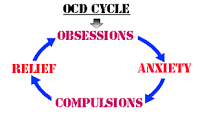
OCD is Obsessive Compulsive Disorder which David Adam called Disorder of thought . A chronic mental illness that can assault its victims' social lives and occupations. The condition can involve either or both obsessions and compulsions, which include unwanted urges or images that incite stress and anxiety, as well as compel patients to exhibit repetitive behaviors, according to the Mayo Clinic . Author David Adam is one of the millions of people in the U.S. who suffers from OCD, and he shares his story  in the book "The Man Who Couldn’t Stop: OCD and the True Story of a Life Lost in Thought." The disease can show itself in various ways, but Adam defines it simply as a "disorder of thought." Most people have thoughts that enter the brain, like jumping in front of a car or hitting a stranger on the street, but often these thoughts leave as randomly and quickly as they appeared. But for other people, like Adam, they stick. Adam explained thes...

Energy Drink & Heart Problem

Image
Energy drinks can cause heart problems according to research presented at ESC Congress 2014 by Professor Milou-Daniel Drici from France. Professor Drici said: "So-called 'energy drinks' are popular in dance clubs and during physical exercise, with people sometimes consuming a number of drinks one after the other. This situation can lead to a number of adverse conditions including angina , cardiac arrhythmia ( irregular heartbeat ) and even sudden death." He added: "Around 96% of these drinks contain caffeine , with a typical 0.25 litre can holding 2 espressos worth of caffeine. Caffeine is one of the most potent agonists of the ryanodine receptors and leads to a massive release of calcium within cardiac cells. This can cause arrhythmias, but also has effects on the heart's abilities to contract and to use oxygen. In addition, 52% of drinks contain taurine , 33% have glucuronolactone and two-thirds contain vitamins ." Dr Drici cont...